
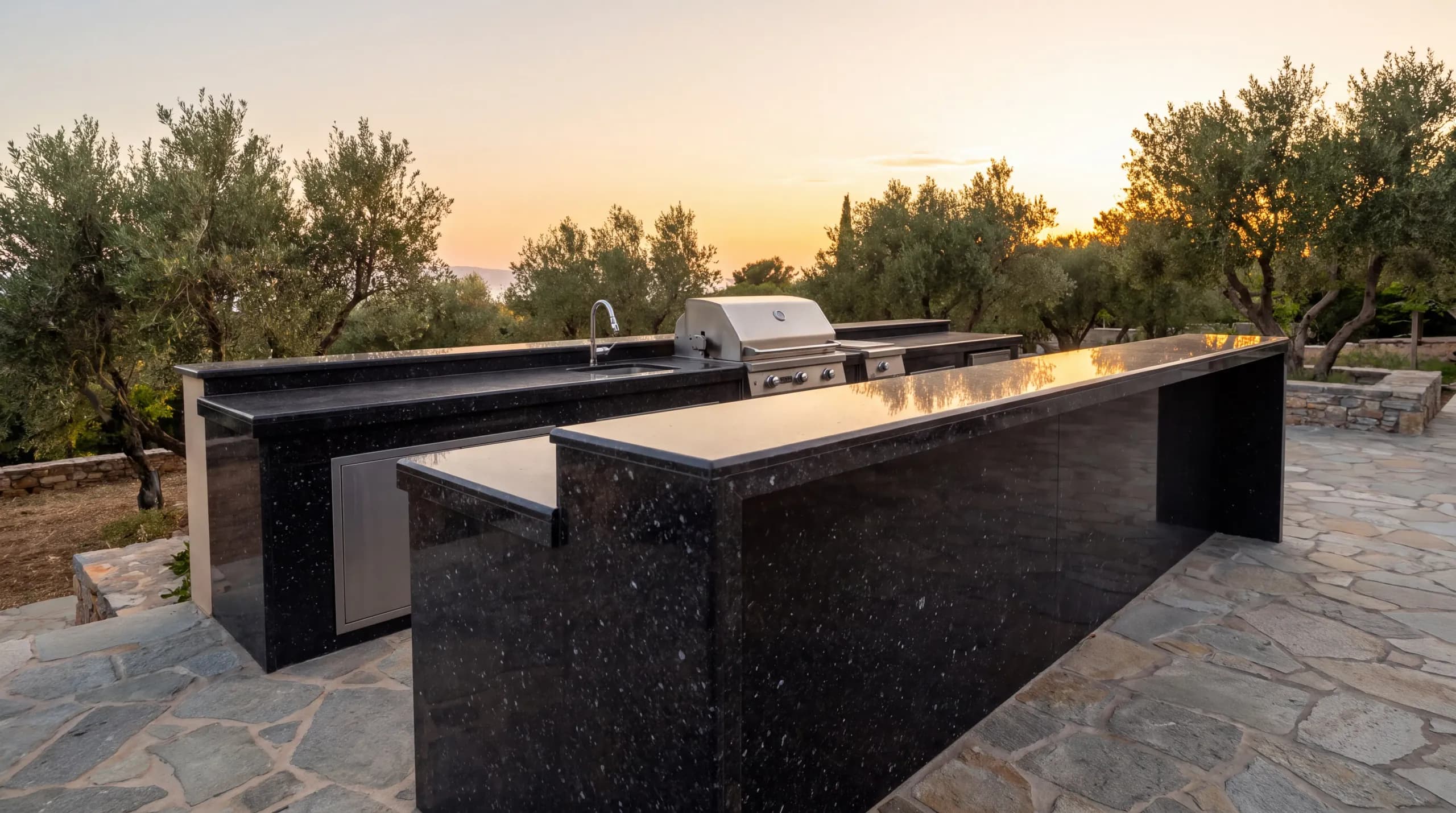
Quartz vs. granite countertops: which is better?
Quartz or granite? Compare heat, sun, sealing, scratches, slab sizes and silica dust, with sources, KLZ slabs and a tool that ranks both.
KLZ Stone Supply · · Updated · 10 min read
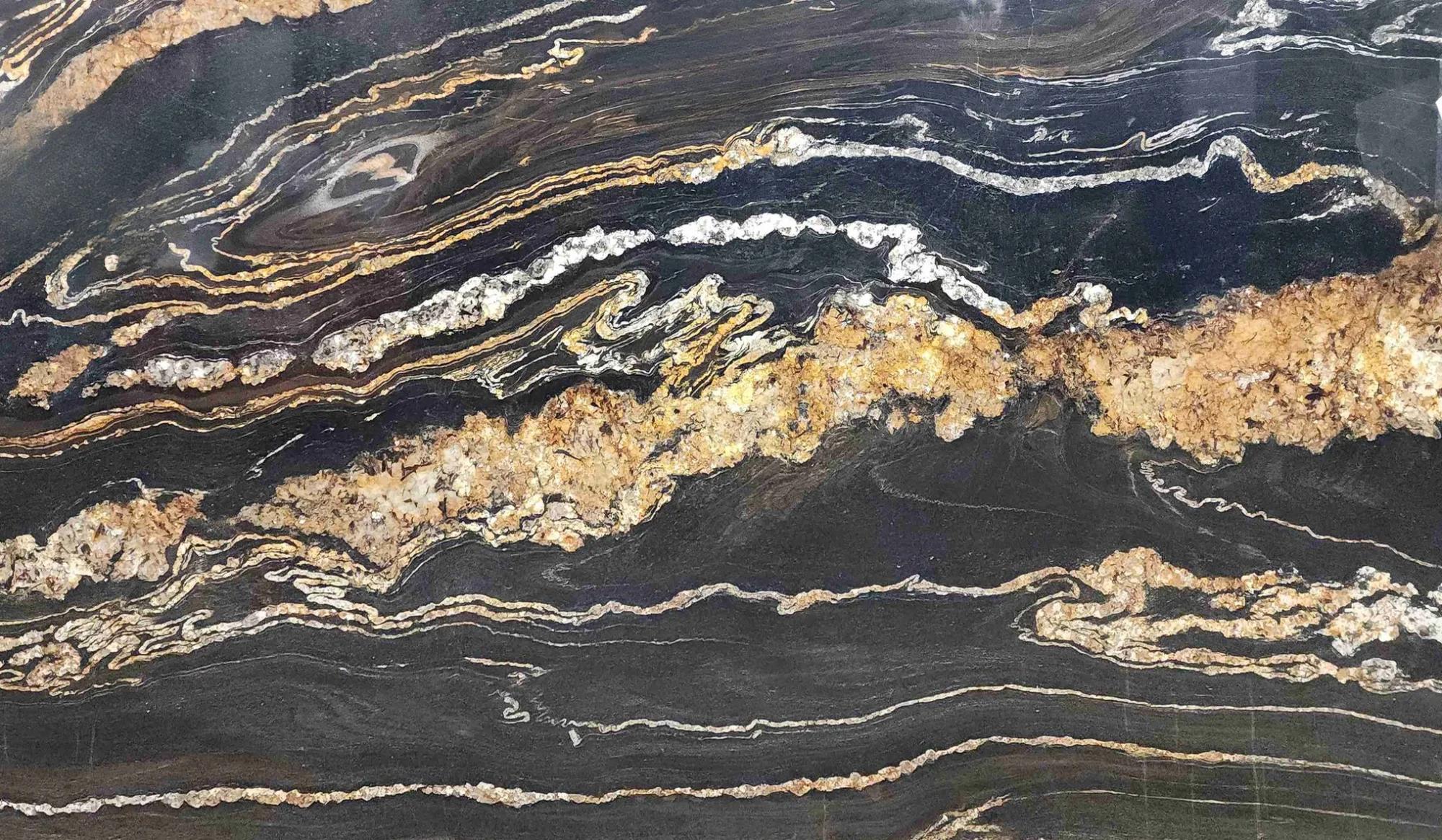
Black TaurusGranite
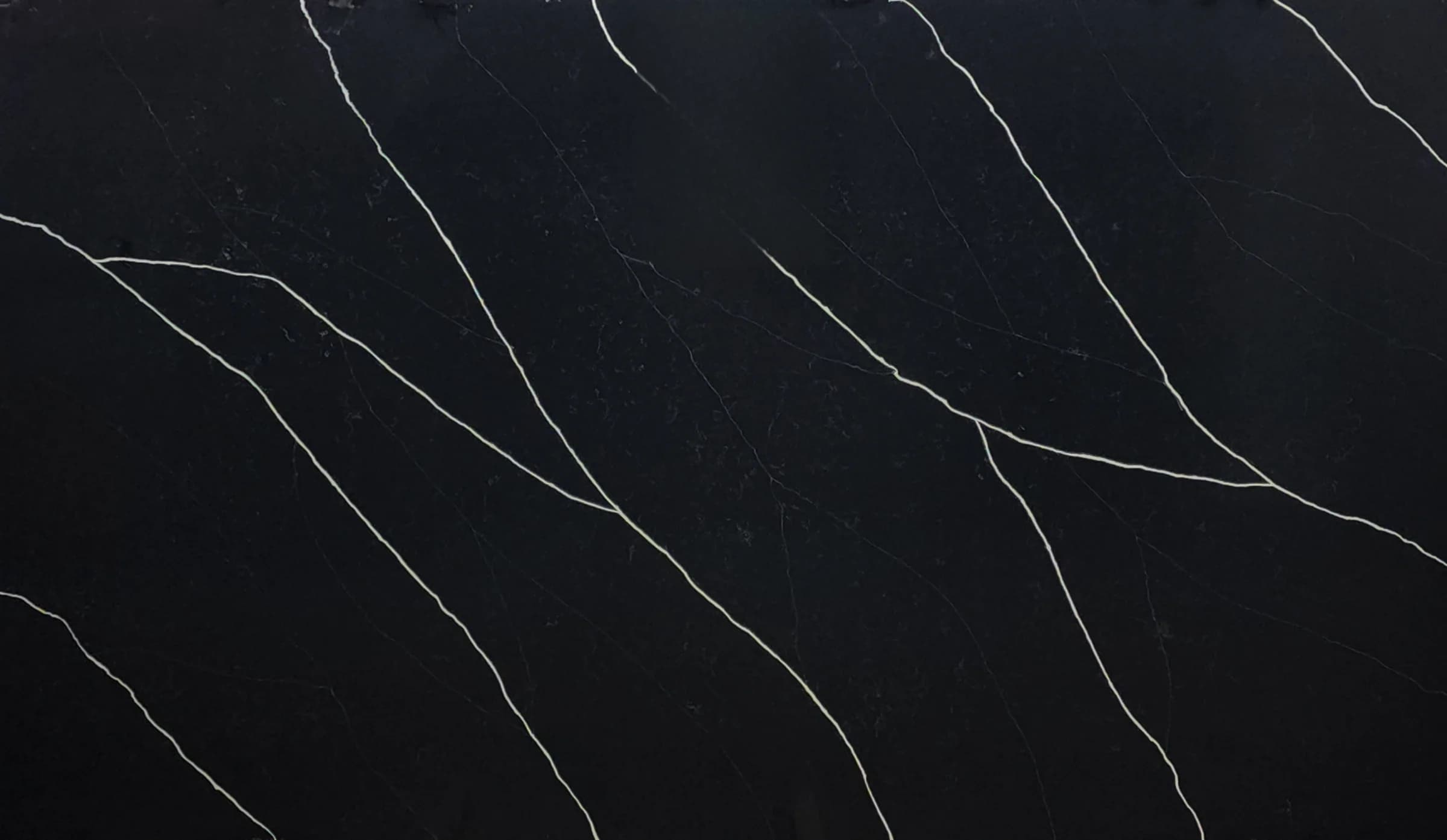
Thunder BlackQuartz
What is the difference between quartz and granite?
Granite is quarried rock. Quartz is a factory product of crushed stone and resin.
Granite is a coarse-grained igneous rock made mostly of quartz, feldspar and mica. A true granite is 20% to 60% quartz by volume.12 The trade word is looser and also covers rocks such as gabbro and diorite.12
Engineered quartz is crushed stone, mostly silica, bound with polyester resin and pressed into slabs under vacuum and vibration. Wikipedia gives the mix as about 93% stone and 7% resin by weight, roughly 66% quartz and 34% resin by volume.13 A stone-industry writer says the finished product may be 30% to 40% resin.4
Engineered quartz is sold as “quartz countertops”. It is not quartzite, which is a natural stone.
How do quartz and granite compare at a glance?
Pattern
- Granite
- Different on every slab4
Hardness
Heat
- Granite
- No mark at about 570 F in one test3
Sun
- Quartz
- Indoor lines can fade8
Sealing
| Property | Granite | Quartz |
|---|---|---|
| Pattern | Different on every slab4 | More uniform137 |
| Hardness | Minerals rate 6 and 714 | Scratch resistant, not scratch proof7 |
| Heat | No mark at about 570 F in one test3 | Makers say to use a trivet710 |
| Sun | The sources disagree48 | Indoor lines can fade8 |
| Sealing | Most does not need it6 | No regular sealing, says Cambria10 |
Which looks better, and which is more consistent?
Granite is the one-of-a-kind choice, and quartz is the one that matches. Every slab of granite differs a little in color and pattern.4 Quartz is more uniform because a factory makes it to a design.413
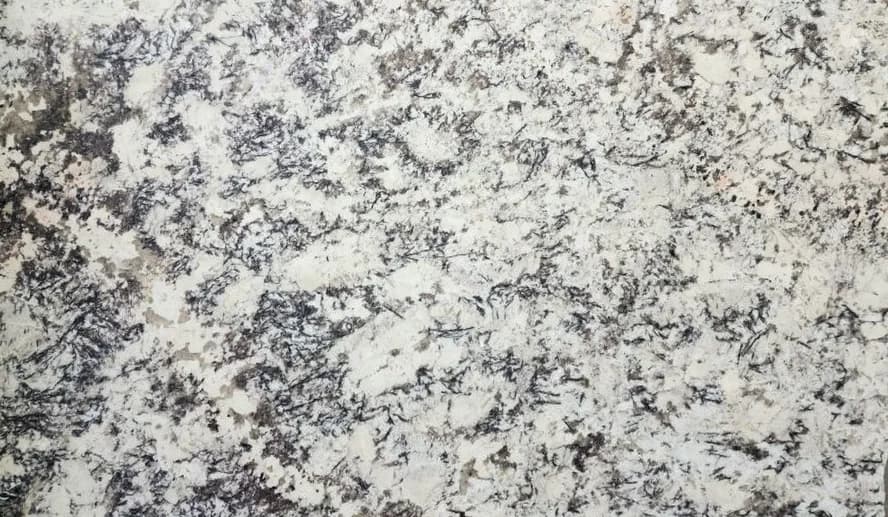
A trade-group guide warns of a large range of color and pattern within one named granite. It says a small sample may not represent a large slab.5 These four granites from the KLZ catalog run from fine speckle to coarse veining.
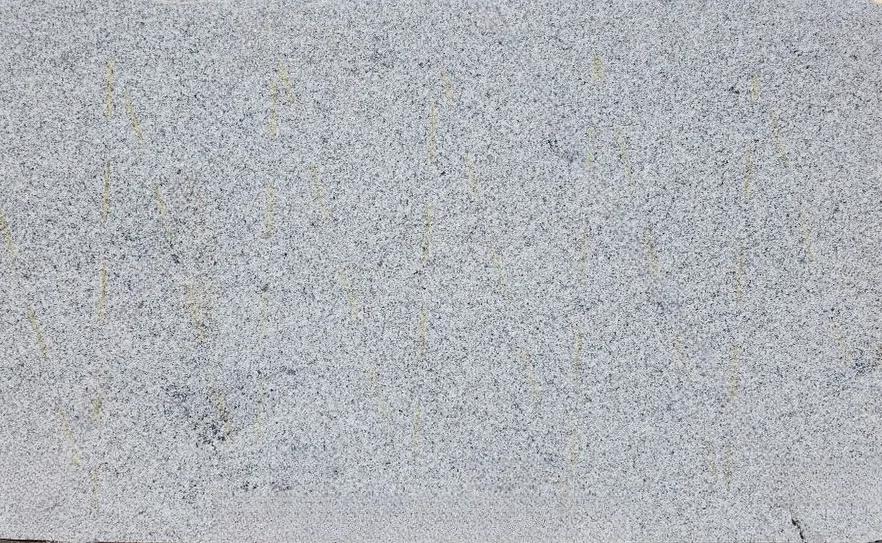
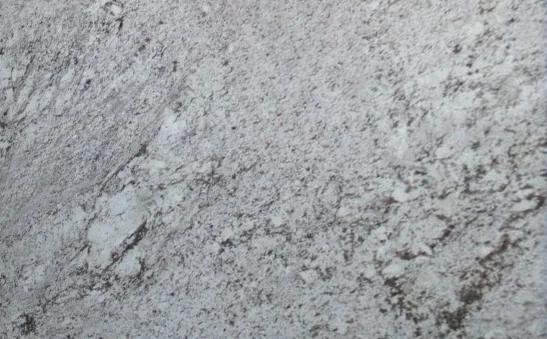
Quartz comes in many colors and patterns, though many do not look like granite or marble.4 Still, Caesarstone's warranty says its slabs vary in color, background tone and quartz distribution, and that samples are only representative.7


Which is harder to scratch, quartz or granite?
They are close, and both resist everyday scratches. Granite is mostly quartz and feldspar,12 so it sits between 6 and 7 on the Mohs scale.
Granite sits between feldspar and quartz on the Mohs scale
In that test, Caesarstone's Eggshell quartz was slightly softer than granite and more readily scratched by the number 6 pick. A second quartz, Sequel Pure Black, tested slightly below 6.3 The sources differ by a point, so a single number overstates what the scale can tell you.
For quartz, the mineral's rating is only part of the story: the resin that binds the grains is considerably softer.3 Caesarstone calls its quartz “a very hard material and highly scratch resistant but not scratch proof” and tells owners to use a cutting board.7 Cutting on granite dulls the knife.5
Which handles a hot pan better?
Granite did, in a trade-group test. With four samples, read it as a sign, not a ruling.
Dry skillet, about 570 F, 10 minutes
Hot oil
| Test | Two granites | Two quartzes |
|---|---|---|
| Dry skillet, about 570 F, 10 minutes | No visible mark on either3 | One showed a mark that wiped off3 |
| Hot oil | One had a faint stain that faded. The other darkened subtly3 | One stained, then faded. The other was hazed and lighter for good3 |
Cambria says its quartz “may not withstand the direct transfer of heat from pots and pans” and recommends a closed-weave hot pad or solid trivet.10Caesarstone's warranty names a hot pan left down for more than a brief time as thermal shock, and says trivets should always be used.7 Wikipedia agrees that engineered quartz is less heat resistant than most granite.13
Can you use quartz or granite outdoors?
Standard indoor quartz should not. For granite, the sources we read disagree, and neither cites a test.
A stone-trade writer
Caesarstone, a quartz maker
| Source | Quartz | Granite |
|---|---|---|
| A stone-trade writer | Can begin to fade or turn yellow within weeks of direct sun4 | Does not fade that way. Stone yards keep thousands of slabs in direct sun4 |
| Caesarstone, a quartz maker | Indoor quartz can fade under prolonged direct sun. Its warranty excludes any outdoor install, and a separate Outdoor Collection has its own warranty87 | UV rays bleach just about any pigmented surface. Any material, granite and marble included, fades if it is not rated for UV8 |
Quartz resin is not completely UV stable, and Wikipedia says engineered stone should not be used outdoors.13 Granite has no resin to break down. For a counter in strong sun, ask the granite's supplier for its own word and test a sample in the light.
Indoors, Caesarstone says windowpane glass mitigates some of the effects, and suggests curtains, blinds or a clear film that blocks nearly all UV rays.8
Does granite need sealing, and does quartz stain?
Most granite does not need sealing, and quartz does not need regular sealing. The Natural Stone Institute says many granite countertops still gain from it. A quality sealer should have a life expectancy of ten to fifteen years.6 Cambria says its quartz is nonabsorbent.10
Granite is porous. Darker granites are denser, and lighter ones may need several coats of sealer.5 Most fabricators recommend some protection against stains.4 Low porosity is not stain-proof, though. Stain a sample of the stone you are buying before you commit.
Turmeric paste
Food coloring
| Stain | Two granites | Two quartzes |
|---|---|---|
| Turmeric paste | Black granite: no visible stain. White granite: moderate, faded overnight3 | One quartz: moderate. Black quartz: none3 |
| Food coloring | Black granite: none. White granite: faint3 | One quartz: moderate, and it stayed. Black quartz: none3 |
The care guide covers day-to-day cleaning, and how often to seal natural stone.
Which stands up better to cleaners and chemicals?
Granite was the more forgiving in one test, and makers still warn against harsh products.
Vinegar and dilute hydrochloric acid, 30 minutes
Soft Scrub
Bar Keepers Friend, 30 seconds of scrubbing
| Cleaner | Two granites | Two quartzes |
|---|---|---|
| Vinegar and dilute hydrochloric acid, 30 minutes | No visible effect3 | No visible effect3 |
| Soft Scrub | No mark3 | Subtle haze on one3 |
| Bar Keepers Friend, 30 seconds of scrubbing | No haze3 | Distinct hazy areas on both3 |
Caesarstone tells owners to avoid strong chemicals and solvents, strong acids and alkalis, and oxidizers, including oven and grill cleaners and floor strippers. Prolonged exposure may damage the surface.9 Cambria recommends warm water and mild soap.10 For granite, the trade group says some chemicals wash a sealer away over time, so it needs resealing sooner.5
Which needs fewer seams, and how big are the slabs?
Slab size sets the seam count, and Caesarstone's quartz slabs are longer than the typical granite slab a trade group describes. The sources measure differently, so treat it as a guide.
Caesarstone's standard slab is 144 by 305 cm, about 57 by 120 inches. Its jumbo slab is 164 by 327 cm, about 65 by 129 inches, with a 1.5% tolerance. Some surfaces are also offered in jumbo, and thickness is 2 cm or 3 cm depending on the color.11 For granite, a trade-group guide sets the typical expectation at 9 by 5 feet and notes that size varies by color. A typical kitchen needs two or three seams, and a large island can sometimes be made without one.5
Caesarstone names two main causes of seam separation or cracking: shifting or movement of the substrate, cabinets or foundation, and thermal shock.7 Where the seams go is your fabricator's call, and it depends on the layout and the slab.
Can you repair a chip in granite or quartz?
Yes, with a professional, and the trade sources say granite repairs hide more easily. Cambria says no stone is chip-proof.10
A trade-group guide says a professional should repair granite, and that most of the time a color-matched epoxy makes the repair virtually invisible. It calls chips rare, most often at undermount sink cutouts.5 For quartz, a stone-trade writer says a professional must match the chip, and the resin keeps the repair from polishing enough to blend in.4 Both are stone-industry sites, so ask your fabricator to show you a repair they have done.
Caesarstone's warranty excludes chips and dents from knocks, and chips or cracks from edges that miss its minimum edge details or from dry cutting.7
Is silica dust a problem with quartz or granite?
It is a hazard in the shop that cuts either one, and engineered stone carries the widest range. For a buyer, the question to ask is how your fabricator controls dust.
Engineered stone has the widest silica range, from under 0.2% to 95%
- Marble and limestoneUnder 5%
- Granite10% to 50%
- Quartzite95% or more
- Engineered stoneUnder 0.2% to 95%
Some engineered stones contain less than 50% crystalline silica in a polymer resin matrix. Some made with recycled glass in a portland cement matrix have less than 0.2%.1
Granite is not a safe harbor. In one OSHA inspection of a granite shop with no engineering controls, workers' exposures ran well past the permissible limit.1
In one granite shop with no controls, exposure ran above the limit
- Permissible limit, eight hours50 µg/m³
- Granite shop, no engineering controls89 to 460 µg/m³
Silicosis has been reported among engineered stone countertop workers in the United States and around the world. In some cases dust suppression or respiratory protection was inadequate or absent.1 Since 1 July 2024, Australia has banned the manufacture, supply, processing and installation of engineered stone benchtops, panels and slabs. Its safety regulator calls the ban a world first, made in response to the rise of silicosis in engineered stone workers.16
The controls are known: wet cutting, local exhaust ventilation, and respirators where exposure stays above the limit. Do as much work as possible in the shop rather than on site.1
Is quartz or granite better for the environment?
No source we read settles it with numbers, and the argument that exists comes from the stone trade.
A writer on the stone trade's consumer site says engineered quartz takes more energy and resources to make, because the minerals are crushed and resins are added. She adds that many quartz products use alumina trihydrate, a filler made from bauxite ore, and that neither natural stone nor mineral quartz is renewable. Natural stone has a sustainability standard, ANSI/NSC 373.4 Treat that as one side: the trade body promotes natural stone, and gives no figures. Ask any maker or quarry for its own environmental data, and read who produced it.
What decides the price of quartz and granite?
The slab you choose, then everything done to it. The trade group says not to be fooled by the stereotype that all granite is expensive,5 so the material alone does not predict a quote.
- The stone or product line. For granite, price follows supply and demand, so a rare stone costs more.5
- The edge profile, the total square footage and the backsplash.5
- Fabrication and installation, which a final quote should include.5
KLZ does not publish prices and quotes each slab by phone or email. On resale, the Natural Stone Institute says granite provides “a strong return on investment” but gives no figures,6 and no source we read compares the resale value of quartz and granite, so this guide does not rank on it.
Which should you choose, quartz or granite?
It depends on your use. These lists sort it.
Choose granite if
- you often set hot pans on the counter, with a trivet in reach
- you want the exact slab to be one of a kind
- you will test it with water now and then, and reseal if it darkens
Choose quartz if
- you do not want to seal a countertop
- you want the pattern to match across a long run or an island
- the counter is indoors, out of strong direct sun
- you will use a trivet every time
What to ask before you buy
- Which stone or product line is this, and can I see the whole slab by its tag number?
- For quartz: does the warranty cover a sunny window or a patio?
- For granite: has it been sealed, and how will I test whether it needs sealing again?
- How does the shop control silica dust when it cuts this material?
- Where will the seams go, and can I see them drawn on the slab before anything is cut?
Where marble fits
Marble is made of carbonate minerals, most commonly calcite, and acids react with the calcium carbonate.2 Wikipedia calls it “soft and porous, so it is easily scratched, and stained by colored liquids.”2Its main mineral, calcite, rates 3 on the Mohs scale, well under granite and quartz,14 and it holds little or no crystalline silica.1The matcher in this section ranks it alongside the others.
Tool
Match a material to your kitchen
Set how much each priority matters, and skip the rest. The ranking updates as you choose.
Your ranking
Set at least one priority to see how these materials rank.
How the scores work, the property table and sources
How the score works
- Each material scores 1 to 3 on each priority, from the property table. A priority is worth its level times the score: a little is 1, a lot is 2, a must-have is 3.
- The scores compare kinds of material for a general kitchen. A particular stone or product line can differ, so test a sample of the one you are considering.
- Most sources are makers and the stone trade's own consumer site, and each has a reason to favor its own product. Where they disagree, the cell says so.
- If the sources say nothing about a priority you set, the tool lists that material as not ranked. It does not guess.
- The scores leave out price, which depends on the slab, the edge, and the fabricator.
The property table behind the scores
Heat near the cooktop
3: A source reports no damage in a heat test, or says hot cookware is fine. 2: Better than quartz, but the source still advises a trivet, or only compares it with quartz. 1: The maker says it may not take direct heat from cookware.
- Quartz 1 of 3. Cambria says its quartz may not withstand direct heat from pots and pans, and Caesarstone's warranty treats a hot pan left down as thermal shock, not a defect. In the trade group's skillet test, hot oil stained one quartz and hazed another for good.8, 6, 1
- Granite 3 of 3. A hot dry skillet (about 570 F, 10 minutes) left no visible mark on either granite tested. Hot oil left a slight stain that faded on one and a subtle darkening on the other. The trade group still advises trivets for appliances that emit heat for long periods, and Cambria says natural stone can be damaged by sudden changes of temperature, especially near the edges.1, 3, 8
- Quartzite 2 of 3. Cambria, which sells quartz, says quartzite is more heat resistant than quartz and still recommends hot pads or trivets for both, and says natural stone can be damaged by sudden changes of temperature, especially near the edges. A Stone World fabricator warns that heat affects the resins put into many natural stones.9, 8, 13
- Marble 2 of 3. Wikipedia lists engineered quartz as less heat resistant than most granite, marble and limestone. No hot-pan test of marble was read.12
- Porcelain 3 of 3. Dekton, a sintered slab, passed thermal shock testing with no damage (EN ISO 10545-9), and Cosentino says it withstands high temperatures without burning, scorching or cracking. Arizona Tile says its porcelain handles high temperatures but advises trivets or hot pads. Both are makers' claims.10, 11, 17
Outdoor use in full sun
3: A source says it suits outdoor use or does not fade in sun, and no source read says it fades. 2: Outdoors only with conditions, or the sources disagree. 1: The maker says it can fade in direct sun and excludes outdoor use from its warranty.
- Quartz 1 of 3. Caesarstone says indoor quartz can fade under prolonged direct sunlight. Its warranty excludes outdoor installs and points to a separate Outdoor Collection.7, 6
- Granite 2 of 3. The stone trade's consumer site says natural stone does not fade the way quartz can. Caesarstone, which sells quartz, says any material, granite included, will fade in sunlight if it has not been rated for UV. The sources disagree and neither cites a test.2, 7
- Quartzite 3 of 3. One fabricator in Stone World calls quartzite great for both indoors and outdoors. The article does not address UV, or whether the resin another fabricator says is put into many natural stones holds up in sun.13
- Marble not scored. No source on marble outdoors was read.
- Porcelain 3 of 3. Cosentino says Dekton is highly resistant to UV rays and will not fade or degrade in any kind of outdoor application, and Arizona Tile says its porcelain is resistant to extreme temperatures and UV rays. Both are makers' claims.11, 17
Low upkeep, no sealing
3: Non-porous, or a source gives a very low water absorption. 2: Sealing is optional, depends on the individual stone, or the sources differ. 1: A source says it is porous and sealing is needed to limit stains.
- Quartz 3 of 3. Cambria calls its quartz nonabsorbent and says it does not require regular sealing. The stone trade's consumer site says engineered quartz is less porous than granite and marble and does not require sealing.8, 2
- Granite 2 of 3. The Natural Stone Institute says most granite does not need sealing, though sealing adds benefit, and a sealer should last 10 to 15 years. Porosity differs from stone to stone.14, 3
- Quartzite 2 of 3. It depends on the stone's porosity, and some porous quartzites benefit from sealer. A Stone World fabricator recommends regular sealing, and Cambria says quartzite requires it.5, 13, 9
- Marble 1 of 3. Marble is porous and can stain, and sealing reduces the effect.2, 15
- Porcelain 3 of 3. Dekton's data sheet lists water absorption of 0.1% and the top stain class (5) for each of the three agents in its staining test (green agent, iodine, olive oil). Arizona Tile says the non-porous surface of its porcelain resists stains.10, 17
A uniform look, slab to slab
3: Made to a design, and a source says it is consistent from slab to slab. 2: Mostly consistent, with named exceptions. 1: Natural stone: a source says color and pattern vary from slab to slab.
- Quartz 3 of 3. More uniform because it is man-made, and Cambria cites consistent colors and patterns from slab to slab. Caesarstone's warranty still allows some variation in color and quartz distribution.2, 9, 6
- Granite 1 of 3. Every slab is slightly different. The trade group's consumer site warns of a large range of color and pattern within one named color.2, 3
- Quartzite 1 of 3. Natural variation can make matching pieces challenging, says Cambria, a quartz maker.9
- Marble 1 of 3. The veins and swirls come from impurities in the original limestone, and the stone trade's consumer site lists the range of color, veining and pattern as an advantage over engineered quartz.15, 2
- Porcelain 3 of 3. Cosentino says controlled pigmentation gives better color consistency from one slab to another, and Arizona Tile says each batch of its porcelain is made in a controlled environment for uniform color and design. Both are makers' claims.11, 17
Natural movement, one of a kind
3: A source says each slab differs in color and pattern. 2: Some variation within a designed pattern. 1: A source describes a consistent pattern made to a design.
- Quartz 1 of 3. More uniform because it is man-made, and Cambria cites consistent colors and patterns from slab to slab.2, 9
- Granite 3 of 3. Every slab of granite is slightly different in color and pattern, so each countertop is unique.2
- Quartzite 3 of 3. Natural variation between slabs, which Cambria notes can make matching pieces challenging.9
- Marble 3 of 3. Signature veins and swirls from impurities in the original limestone, and a wide range of color, veining and pattern, which the stone trade's consumer site counts as an advantage over engineered quartz.15, 2
- Porcelain 1 of 3. Cosentino describes controlled pigmentation and decoration in manufacturing, and Arizona Tile says digital printing designs each slab with lifelike patterns.11, 17
No etching from lemon juice or vinegar
3: A source reports no visible effect from household acids. 2: Etches slowly or only on some stones. 1: A source says it is made of calcite and acids etch it.
- Quartz 3 of 3. A 30-minute test with vinegar and dilute hydrochloric acid left no visible effect on either engineered quartz. A 30-second scrub with Bar Keepers Friend did haze both.1
- Granite 3 of 3. The same test left both granites unaffected, and a stone-care expert calls granite not sensitive to most common household acids.1, 16
- Quartzite 3 of 3. True quartzite does not etch. A stone sold as quartzite that does etch is likely marble or dolomite.5, 4
- Marble 1 of 3. Marble is a carbonate rock, most commonly calcite, so acids react with it and etch it, and polished slabs show the etching most.4, 15
- Porcelain 3 of 3. Dekton's data sheet lists acetic, citric, lactic and phosphoric acids as not affecting it (ASTM C650).10
Chip resistance at edges
3: A source rates it chip resistant with no caveat. 2: Called chip resistant, not chip-proof, and no source ranks it above the others. 1: The maker's fabrication advice is built around preventing edge chips.
- Quartz 2 of 3. Cambria says quartz and quartzite are known for resistance to chips, and also that no stone is chip-proof. Caesarstone's warranty excludes chips from knocks and from edges that miss its minimum edge details.8, 9, 6
- Granite 2 of 3. The trade group's consumer site calls chips rare, and says the edges of undermount sink cutouts are where they happen.3
- Quartzite 2 of 3. A Stone World fabricator praises its resistance to chipping, and Cambria says both quartz and quartzite resist chips. No source ranks it against granite.13, 9
- Marble not scored. No source on chipping in marble was read.
- Porcelain not scored. No source read rates porcelain's chip resistance. Arizona Tile tells fabricators to use a micro-bevel or 1 mm round edge to prevent chipping, which is edge advice, not a rating.
Sources for the property table
- 1Karin Kirk, Got Data? Testing the Performance of Granite, Engineered Quartz, Concrete, and Sintered Countertop Surfaces, Use Natural Stone (2019). Read 2026-11-18.
- 2Stephanie Vierra, Granite vs. Engineered Quartz for Your Kitchen Countertop, Use Natural Stone (2019). Read 2026-11-18.
- 3Pros & Cons of Granite Countertops, Use Natural Stone (2017). Read 2026-11-18.
- 4Karin Kirk, How to Be Your Own Stone Sleuth, Use Natural Stone. Read 2026-11-18.
- 5Stephanie Vozza, Caring For Quartzite Countertops, Use Natural Stone (2019). Read 2026-11-18.
- 6Caesarstone, Quartz, Mineral and ICON Surfaces Residential Limited Lifetime Warranty (June 2025). Read 2026-11-18.
- 7Caesarstone, Does Quartz Fade in Sunlight?. Read 2026-11-18.
- 8Cambria, Product care FAQ. Read 2026-11-18.
- 9Cambria, Quartz vs. Quartzite Countertops. Read 2026-11-18.
- 10Cosentino, Dekton Technical Data Sheet (rev. 26, November 2023). Read 2026-11-18.
- 11Cosentino, Product Guide 2023-2024 (Dekton pages). Read 2026-11-18.
- 12Wikipedia, Engineered stone. Read 2026-11-18.
- 13Jennifer Richinelli, Fabricators Weigh in on Quartzite, Stone World (2024). Read 2026-11-18.
- 14Natural Stone Institute, Sealing Natural Stone Countertops. Read 2026-11-18.
- 15Wikipedia, Marble. Read 2026-11-18.
- 16Stephanie Vozza, How to Care For Your Granite Countertops, Use Natural Stone (2018). Read 2026-11-18.
- 17Arizona Tile, Della Terra Porcelain Slabs (2025). Read 2026-11-18.
To see both side by side, visit the Dallas showroom during opening hours, or browse granite and quartz in the catalog.
Questions people ask
Is quartz or granite better for countertops?
Neither is better for everyone. In one trade-group test, granite handled a hot pan better than quartz, and it varies from slab to slab. Quartz makers say it needs no regular sealing, and it looks more uniform from slab to slab, but its resin limits heat and sun. Both resist scratches, and both release silica dust when cut.
Which is more heat resistant, quartz or granite?
Granite. In a trade-group test, a dry skillet at about 570 F left no visible mark on either granite. Quartz makers say to use a trivet, and Caesarstone's warranty treats a hot pan left down as thermal shock. Use a trivet on both.
Can quartz countertops go outside?
Standard indoor quartz should not. Caesarstone says its indoor quartz can fade under prolonged direct sunlight, and its warranty excludes outdoor installs. Caesarstone sells a separate Outdoor Collection with its own warranty. Granite has no resin to break down, and a stone-trade writer says it does not fade that way, but Caesarstone says any material, granite included, fades in sun unless rated for UV.
Does granite need to be sealed, and does quartz?
Cambria says its quartz is nonabsorbent and does not require regular sealing. The Natural Stone Institute says most granite countertops do not need sealing, though many gain from it, and a quality sealer should last ten to fifteen years. Porosity differs from stone to stone, so ask your fabricator about yours.
Source: Natural Stone Institute, Sealing Natural Stone Countertops
Is quartz or granite harder?
They are close. Granite is mostly feldspar (6 on the Mohs scale) and quartz (7). Engineered quartz is mostly crushed quartz in resin, and Caesarstone calls its quartz highly scratch resistant but not scratch proof. A hardness-pick test found Caesarstone Eggshell quartz slightly softer than two granites.
Which is more expensive, quartz or granite?
It depends on the slab. A trade group says price follows the specific stone, the edge profile, the square footage and the backsplash, and a final quote should include material, fabrication and installation, so the material alone does not predict the quote. KLZ does not publish prices and quotes each slab by phone or email.
Is silica dust from quartz or granite a risk to homeowners?
The hazard OSHA and NIOSH describe is for workers who manufacture, finish and install stone countertops. Typical crystalline silica is under 0.2% to 95% in engineered stone and 10% to 50% in granite, so granite shops need dust controls too. Ask your fabricator about wet cutting and ventilation.
What are the pros and cons of granite vs quartz countertops?
Granite's pros are heat tolerance and a one-of-a-kind slab. Its cons are a possible need to seal and a wide range of pattern within one color. Quartz's pros are no regular sealing and a more uniform pattern. Its cons are limits on heat and sun, and resin that makes chip repairs harder to hide.
Sources
Each page was read on unless its own date is given.
- 1OSHA and NIOSH, Hazard Alert: Worker Exposure to Silica during Countertop Manufacturing, Finishing, and Installation, publication 2026-101
- 2Wikipedia, Marble
- 3Karin Kirk, Got Data? Testing the Performance of Granite, Engineered Quartz, Concrete, and Sintered Countertop Surfaces, Use Natural Stone (2019)
- 4Stephanie Vierra, Granite vs. Engineered Quartz for Your Kitchen Countertop, Use Natural Stone (2019)
- 5Pros & Cons of Granite Countertops, Use Natural Stone (2017)
- 6Natural Stone Institute, Sealing Natural Stone Countertops
- 7Caesarstone, Quartz, Mineral and ICON Surfaces Residential Limited Lifetime Warranty (June 2025)
- 8Caesarstone, Does Quartz Fade in Sunlight?
- 9Caesarstone, Care and maintenance
- 10Cambria, Product care FAQ
- 11Caesarstone, Slab dimensions and edge details
- 12Wikipedia, Granite
- 13Wikipedia, Engineered stone
- 14Wikipedia, Mohs scale of mineral hardness
- 15US EPA, What about radon and radioactivity in granite countertops?
- 16Safe Work Australia, Engineered stone ban