
How to Clean Quartzite Countertops
Clean quartzite with warm water and mild soap, lift stains with a poultice, and seal only when the water drop test fails. Two tools included.
KLZ Stone Supply · · Updated · 13 min read
How do you clean quartzite countertops every day?
Wipe it with a soft cloth and warm water mixed with a neutral cleaner, stone soap or a mild dish detergent, then rinse and dry.2
In a bath or other wet area, a squeegee after each use minimizes soap scum.2 Wipe spills when they happen, as a Stone World fabricator advises.9
What do you clean quartzite countertops with?
A neutral cleaner, stone soap or dish soap, in warm water.2 MSI says “pH-neutral.”8 The Institute says “neutral cleaner” and, for calcareous stone, “mild, non-acidic.”2 A label that says plant-based or multi-surface is not a promise about stone, and MSI warns against assuming it is.8
Can you clean quartzite countertops naturally?
Yes, if natural means plain: warm water and a few drops of dish soap. A baking soda paste is the Institute's recipe for oil stains.1 For germs, the Institute says alcohol cleaners are unlikely to cause problems on most natural stone.4
Natural does not mean vinegar or lemon. The Institute says lemon, vinegar and other acids may dull or etch calcareous stone.2 MSI answers no to vinegar on quartzite and says it is corrosive and eats away at sealers over time.8
What should you never use on quartzite countertops?
Acids, scouring powders, rust removers with hydrofluoric acid, and, as an everyday cleaner, bleach and ammonia.
Vinegar, lemon, citrus cleaners
- What the sources say
- Acids may dull or etch calcareous stone.2 MSI lists vinegar and lemon juice as things to avoid on quartzite.8 Use Natural Stone says true quartzite resists common kitchen acids and will not etch with lemon juice or vinegar,15 and the Institute says siliceous stone is generally resistant, but acidic cleaners are still not recommended.2
Bleach
- What the sources say
- Not an everyday cleaner. The Institute names diluted bleach for mildew and for ink on light stone,1 and says diluted bleach is unlikely to cause problems on most natural stone.4 MSI lists it among harsh chemicals to avoid.8 Dry-Treat says its impregnating sealers are bleach tolerant,5 and warns that bleach can produce corrosive gases if mixed with other household products such as toilet cleaners.
Ammonia and window cleaner
Scouring powders and abrasive pads
Rust removers with hydrofluoric acid
- What the sources say
- Many commercial rust removers contain trace levels of hydrofluoric acid, which attacks silicates and, the Institute says, all stones, including granite and quartzite.2
Solvents as a routine cleaner
| Product | What the sources say |
|---|---|
| Vinegar, lemon, citrus cleaners | Acids may dull or etch calcareous stone.2 MSI lists vinegar and lemon juice as things to avoid on quartzite.8 Use Natural Stone says true quartzite resists common kitchen acids and will not etch with lemon juice or vinegar,15 and the Institute says siliceous stone is generally resistant, but acidic cleaners are still not recommended.2 |
| Bleach | Not an everyday cleaner. The Institute names diluted bleach for mildew and for ink on light stone,1 and says diluted bleach is unlikely to cause problems on most natural stone.4 MSI lists it among harsh chemicals to avoid.8 Dry-Treat says its impregnating sealers are bleach tolerant,5 and warns that bleach can produce corrosive gases if mixed with other household products such as toilet cleaners. |
| Ammonia and window cleaner | Frequent or over-use of an ammonia solution may eventually dull the surface of some stone types.2 MSI lists ammonia and window cleaners among harsh chemicals to avoid.8 Never mix ammonia with bleach: the Institute says the combination creates a toxic and lethal gas.2 |
| Scouring powders and abrasive pads | Scouring powders and creams often contain abrasives that may scratch certain stones.2 MSI says to avoid abrasive sponges.8 |
| Rust removers with hydrofluoric acid | Many commercial rust removers contain trace levels of hydrofluoric acid, which attacks silicates and, the Institute says, all stones, including granite and quartzite.2 |
| Solvents as a routine cleaner | Dry-Treat says solvents such as xylene, acetone or paint stripper can remove sealer residue. If the surface then stops repelling water, reseal the affected area.5 MSI lists chemical solvents among the things to avoid on quartzite.8 |
No source says whether bleach or ammonia strips a sealer. Treat both as spot tools, as the Institute does, and keep them out of the daily bottle. A pad is a smaller scratch risk on true quartzite than on marble, as the hardness chart in the next section shows.
What if your quartzite is really dolomite?
Then clean it the way you would clean marble: no acids, spills wiped fast, and a sealer checked often. Choose marble in the stain finder. A fabricator told Stone World that “white” quartzites such as Mont Blanc are most likely dolomites “and will retain water, etch and stain much like marble.”9
Another fabricator says many materials sold as quartzite “have not spent enough time in the ground to truly become a quartzite.” He ties the water and oil absorption problems he sees to them.9 Hardness points the same way.
Dolomite and calcite are far softer than quartz
KLZ's inventory files Mont Blanc, the stone Stone World names, under marble, and carries a separate dolomite class beside quartzite. Read the class on the tag, not only the name.
Three checks before you buy
- Glass. Use Natural Stone says true quartzites will scratch glass.15 Run it on an offcut your fabricator gives you, never on the face of a slab you have not bought.
- Lemon juice. A geologist quoted by Use Natural Stone suggests a lemon juice test: true quartzites do not etch.15 Try it on the same offcut, not on a finished counter.
- Water. A fabricator in Stone World says materials mislabeled as quartzite are like a sponge when they are grainy. The water drop test is one way to see it.9
Does quartzite stain?
It can. Quartzite is natural stone, and a Stone World fabricator says it is more prone to staining and water marks.9 A sealer slows staining but does not stop it: the Institute says sealing does not make stone stain proof, only more stain resistant.2
One fabricator has seen moisture retention on seams and around faucet holes, bleeding or staining that can gray the veins weeks and even months later. Another says water that finds an unsealed edge, a sink cutout or a faucet hole is sucked up from underneath like a sponge.9 That is why one seals before cutting, and why you should ask yours what they sealed.
Many natural stones have resin put in them to seal cracks and fissures. That makes a countertop behave more like laminate: no heat and no cutting on it. Use a trivet and a board.9
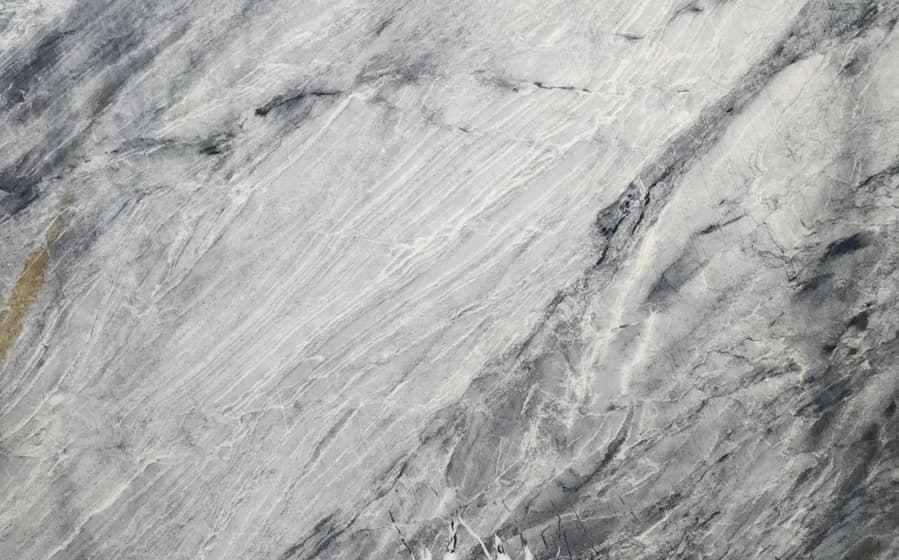
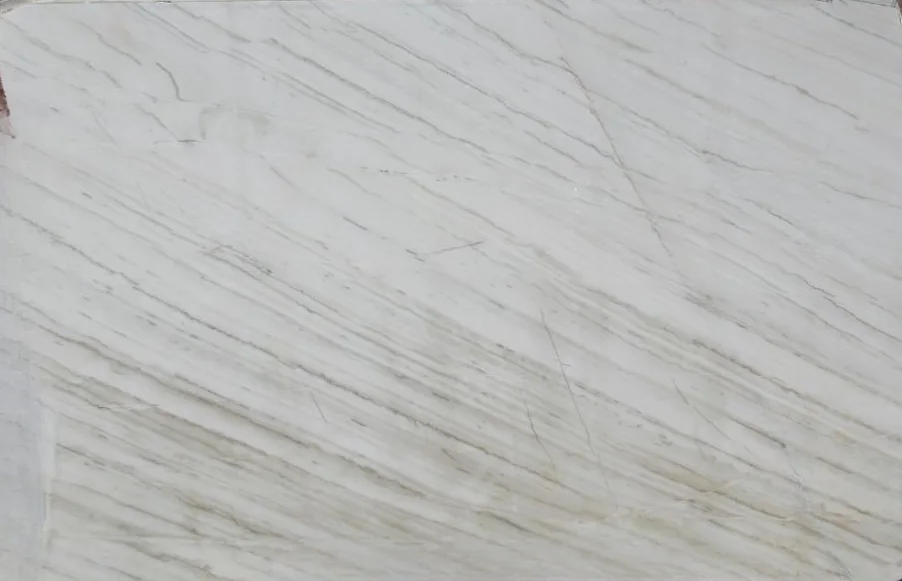
Is the mark a stain or an etch?
An etch is damage to the finish from acid left on the surface, a dull spot with no color in it. The Institute says some materials will etch the finish but not leave a stain, and others will both etch and stain.2
What it is
- Stain
- Color inside the stone
- Etch
- Polish dissolved by acid
- Hard water film
- Minerals left by dried water
- Scratch
- A groove in the surface
Cause
What removes it
Does a sealer stop it?
| Stain | Etch | Hard water film | Scratch | |
|---|---|---|---|---|
| What it is | Color inside the stone | Polish dissolved by acid | Minerals left by dried water | A groove in the surface |
| Cause | Oil, coffee, ink, rust, food.1 | Acids such as lemon and vinegar.2 | Surface build-up of hard water.1 | Scouring powders and other abrasives.2 |
| What removes it | A poultice made for the stain.1 | Marble polishing powder, buffed. A professional if it will not come out.1 | Buffing with dry 0000 steel wool.1 | Buff light scratches with dry 0000 steel wool. A professional for deeper ones.1 |
| Does a sealer stop it? | It slows it.2 | No. Dry-Treat says its sealer will not prevent surface etching.6 | No source says it does | No. Dry-Treat says its sealer will not prevent scuff marks or wear.6 |
A dull spot on a counter sold as quartzite is a clue about the slab as much as a mark to remove. Use Natural Stone says true quartzites do not etch.15
How do you remove a stain from quartzite?
Blot it, flush it, and if it stays, draw it out with a poultice. A poultice is an absorbent powder mixed with a liquid that dissolves the stain. It stays on under plastic, so the stone gives the stain up into the paste.1
Oil and grease
- Poultice
- Baking soda and water, or a powder wet with mineral spirits.1
Coffee, tea, wine, fruit and food
Iron and rust
| Stain | Poultice |
|---|---|
| Oil and grease | Baking soda and water, or a powder wet with mineral spirits.1 |
| Coffee, tea, wine, fruit and food | A powder wet with 12% hydrogen peroxide, or with acetone.1 The Institute's care page lists wine with the organic stains.2 |
| Iron and rust | Diatomaceous earth with a commercial rust remover.1 Read the label first: the Institute says many removers contain trace levels of hydrofluoric acid, which attacks all stones, including quartzite.2 |
Homes & Gardens gives a baking soda paste for stains in general.14 The tool gives the method, the recipe and what to avoid for your stone and stain.
Tool
Stain finder
Choose the countertop and the stain. Every line links to its source. Engineered quartz follows Caesarstone12 and Cambria,13 which describe it as non-porous and warn against the solvents and oxidizers in the natural-stone recipes.
Pick a stain for the method, the poultice recipe and what to leave in the cupboard.
How to apply a poultice
Mix the paste
Kaolin, diatomaceous earth, fuller's earth, whiting, powdered chalk, white molding plaster or talc, stirred with the liquid to the consistency of peanut butter. About a pound covers a square foot.1Wet the stain and spread the paste
Wet it with distilled water, then spread the paste 1/4 to 1/2 inch thick, reaching about an inch past the stain.1Cover and wait
Cover with plastic, tape the edges, and leave 24 to 48 hours. Take the plastic off after about 24 hours so it can finish drying.1Rinse and repeat
Remove the paste, rinse with distilled water and buff dry. A hard stain can take up to five applications.1
How do you remove hard water spots from quartzite?
Wipe the spot with warm water and a mild soap, rinse, dry, and buff what remains with dry 0000 steel wool.1 MSI's FAQ lists steel wool among the things not to use on quartzite,8 so the sources disagree: try a hidden corner first, or skip it.
MSI's version is gentler: a soft microfiber cloth, a stone-safe mineral cleaner, and light circular buffing, without repeated scrubbing. It says etching or finish damage may need a professional.8 Rinse thoroughly first, because too much cleaner may leave a film.2
Do not use an acid descaler: acids dull or etch calcareous stone.2 Squeegee wet areas and dry the counter to prevent spots.2 KLZ's care guide covers Dallas hard water.
Do quartzite and granite countertops need to be sealed?
It depends on the stone. MSI says most quartzite needs sealing,8 Use Natural Stone says it depends on the stone's porosity,15 and the Natural Stone Institute says “most granite countertops do not need to be sealed.”3 The water drop test settles it for the slab you have.
Quartzite. Fabricators in Stone World recommend regular sealing and seal before cutting. One compares sealing to waterproofing a shower: if any place was missed, the water will find it. He lists the back edges, sink cutouts, faucet holes and the area under the dishwasher.9 MSI calls an impregnating sealer the best choice for most purposes.8
Granite. The Institute says in many cases it makes sense to seal marble and granite with a quality sealer.3 Tenax, a sealer maker, calls granite porous and says that without a sealer you risk permanent discoloration.7 The statements differ, so test.
If you do seal, the Institute says the product should have a life expectancy of ten to fifteen years. It should resist both water and oil based stains.3 Engineered quartz is the exception: Cambria says it never needs sealing and tells owners to apply no sealer.13
How do you do the water drop test?
Wet a clean, dry spot, wait, blot, and look for a dark mark.
Wait
The guides give different clocks, as the clock chart shows. The tool reads drops at 5, 10, 15 and 20 minutes.Blot it and look
Dry up the water. Dry-Treat blots firmly with a tissue.5 Look for a dark mark.
The guides wait 5 to 20 minutes before they judge a drop
Tool
Water drop test
A timer and a form. It reads what you saw into one of three answers: seal now, check again in 6 months, or does not need sealing.
Your reading
Not enough to read yet
- Choose the stone.
- Say whether it has been sealed.
- Read the 5-minute drop.
- Read the 10-minute drop.
- Read the 15-minute drop.
Assumptions behind this reading
- One drop per mark, a few inches apart, all put down together. At each mark, blot that drop with a tissue and look for a dark spot; a drop that has sunk in counts as soaked. This one-drop-per-mark layout is the tool's, so each check leaves the others undisturbed.
- A tablespoon of water per mark, which is Dry-Treat's amount. MSI describes droplets; both sets of thresholds are read the same way.
- A clean, dry, polished face away from the sink edge. Test a second spot where water sits: by the sink and the cooktop.
- If you sealed in the last three weeks, wait. Dry-Treat says its sealer needs at least 3 weeks to cure before testing, and other brands differ. Read your label.
- This reads a countertop, not a slab's identity. A stone that soaks water the moment it touches may be dolomite or marble sold as quartzite.
How often should you reseal quartzite and granite?
When the test fails, not on a date. The Institute gives no resealing interval, only the ten to fifteen years of life it wants from a sealer,3 and the guides that do give one disagree by years.
Resealing intervals run from 3 months to 3 years, depending on the stone and the guide
- Quartzite: MSI says the area around the sink and dishwasher may need a touch-up every 6 months.8 Homes & Gardens says at least once every 12 months.14 Use Natural Stone says many modern sealers protect stone for 1 to 10 years.15 Tenax gives no quartzite figure.
- Long-life sealers: Tenax says nano sealers often last 5 years or more.7 Dry-Treat offers a 15-year performance warranty only when an accredited applicator applies its sealer and the surface is maintained with its written system.6
- Engineered quartz: Tenax says sealer is optional, with a quartz enhancer as needed.7 Cambria says it never needs sealing.13
These figures come from different makers, products and stones, so the test is the tiebreaker.
How do you seal quartzite and granite countertops?
Use a penetrating sealer on clean, dry stone. Keep it wet for a few minutes, then buff off every bit that has not soaked in.
Test a hidden spot
Try the sealer where it will not show. Dry-Treat says a sealer may lighten or darken some surfaces and suggests waiting 24 hours to judge the result.6Wipe it on, in sections
Tenax says to apply it with a cloth, foam applicator or sprayer and to work in sections.7 Dry-Treat says to wipe it over polished, dense surfaces rather than spray. On a porous stone it says to apply enough that it looks wet for 3 to 5 seconds. Its sealer is a highly flammable liquid, so ventilate and keep flames away.6Let it dwell, then add a second coat if needed
A honed granite face takes more sealer than a polished one
How do you disinfect quartzite countertops safely?
Use an alcohol-based cleaner or an EPA-registered product whose label says it is safe for marble or natural stone, and test it somewhere hidden. The Natural Stone Institute says alcohol cleaners and diluted bleach are unlikely to cause issues with most natural stone surfaces.4 The EPA says to wash the surface with soap and water first if the directions mention pre-cleaning or the surface is visibly dirty.17
The Institute gives no dilution and no contact time, and does not say what either does to a sealer. The EPA says the contact time is in the product's directions and the surface should stay wet the whole time.17 Do not mix bleach and ammonia.2 If the stone etches, as dolomite does, avoid acid disinfectants,2 and rinse and dry afterward.
How do you clean Taj Mahal quartzite?
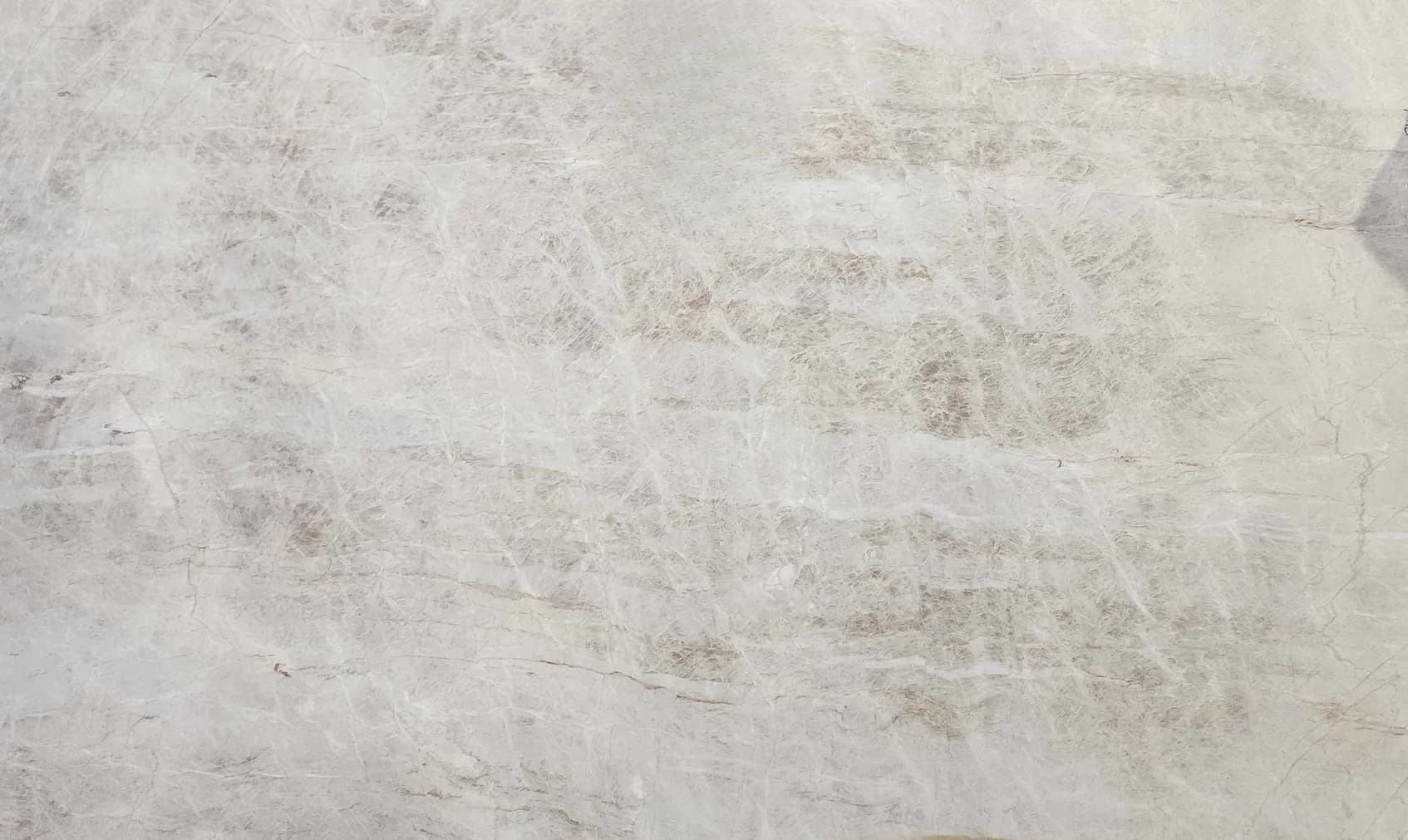
The same way you clean every other quartzite, once you have confirmed the slab is quartzite. A name on a quote does not tell you the material. KLZ's inventory has a Taj Mahal filed under quartzite and a Taj Mahal Quartz filed under quartz. If a slab is manufactured quartz, Cambria says it never needs sealing and takes no sealer.13 Check which one is on your quote.
Then follow this page: neutral soap, no acids, the water drop test, a poultice for stains.2 KLZ's feed lists Brazil as the origin of the Taj Mahal quartzite. Ask your fabricator which finish you have before you pick a product: a honed granite face takes more sealer than a polished one.6
Questions people ask
How do you clean quartzite countertops?
Wipe them with a soft cloth and warm water mixed with a neutral cleaner, stone soap or mild dish soap, rinse, and dry. Use as little soap as possible, because too much may leave a film. Keep vinegar, lemon and scouring powders off the surface.
Source: Natural Stone Institute, Learn About Cleaning Products for Natural Stone
What do you clean quartzite countertops with?
A neutral cleaner, stone soap or a mild liquid dish detergent in warm water. The Natural Stone Institute warns that lemon, vinegar and other acids may dull or etch calcareous stone, and that scouring powders may scratch certain stones.
Source: Natural Stone Institute, Learn About Cleaning Products for Natural Stone
What is the best way to clean quartzite countertops naturally?
Warm water and a few drops of dish soap, then rinse and dry. A baking soda paste is the Natural Stone Institute's recipe for oil stains. Vinegar and lemon are natural but acidic, and acids may dull or etch calcareous stone.
Source: Natural Stone Institute, Remove Stains from Stone Applications
Does quartzite stain?
It can. Quartzite is natural stone, and a fabricator in Stone World says it is more prone to staining and water marks. A sealer makes stone more stain resistant, not stain proof. A white stone sold as quartzite may be dolomite, which a fabricator in Stone World says will retain water, etch and stain much like marble.
Source: Stone World, Fabricators Weigh in on Quartzite (2024)
Does granite need to be sealed?
Usually not. The Natural Stone Institute's position is that most granite countertops do not need to be sealed, though in many cases it makes sense to seal marble and granite with a quality sealer. Test with water: if a drop darkens the stone, seal it.
Source: Natural Stone Institute, Sealing Natural Stone Countertops (2006)
How do you seal granite countertops?
Clean the granite and let it dry completely, test a hidden spot, apply a penetrating sealer, let it dwell about 10 minutes without drying, add a second coat if needed, and buff off all excess. Dry-Treat says to keep water off for six hours.
Source: Dry-Treat, STAIN-PROOF Original product specification sheet
How often should quartzite be sealed?
When the water drop test fails. MSI gives 6 to 12 months for quartzite and Homes & Gardens says at least once every 12 months, while the Natural Stone Institute gives no interval. MSI says a drop that darkens the stone, or is absorbed quickly, after 10 to 15 minutes means reseal.
Source: MSI, How to Clean & Seal Quartzite Countertops (published 2025, updated October 21, 2026)
How do you clean Taj Mahal quartzite?
The same way you clean every other quartzite: neutral soap and warm water, no acids, a water drop test to decide on sealing, and a poultice for stains. Confirm first that the slab is quartzite and not manufactured quartz, which Cambria says never needs sealing.
Source: Natural Stone Institute, Learn About Cleaning Products for Natural Stone
Sources
Each page was read on unless its own date is given.
- 1Natural Stone Institute, Remove Stains from Stone Applications
- 2Natural Stone Institute, Learn About Cleaning Products for Natural Stone
- 3Natural Stone Institute, Sealing Natural Stone Countertops (position statement adopted 2006)
- 4Natural Stone Institute, COVID-19 Resources (cleaning and disinfecting stone)
- 5Dry-Treat, STAIN-PROOF FAQs (how impregnators work, the water test)
- 6Dry-Treat, STAIN-PROOF Original product specification sheet
- 7Tenax, Best Sealer for Granite & Quartz: The Complete Guide (2026)
- 8MSI, How to Clean & Seal Quartzite Countertops (published May 19, 2025, updated October 21, 2026)
- 9Jennifer Richinelli, Fabricators Weigh in on Quartzite, Stone World (June 24, 2024)
- 10National Park Service, Mohs Hardness Scale
- 11Handbook of Mineralogy, Dolomite
- 12Caesarstone, Care and maintenance
- 13Cambria, Care & Maintenance
- 14Chiana Dickson, How to clean quartzite countertops, Homes & Gardens (October 31, 2024)
- 15Stephanie Vozza, Caring For Quartzite Countertops, Use Natural Stone (April 4, 2019)
- 16Handbook of Mineralogy, Calcite
- 17U.S. EPA, 6 Steps for Safe & Effective Disinfectant Use