
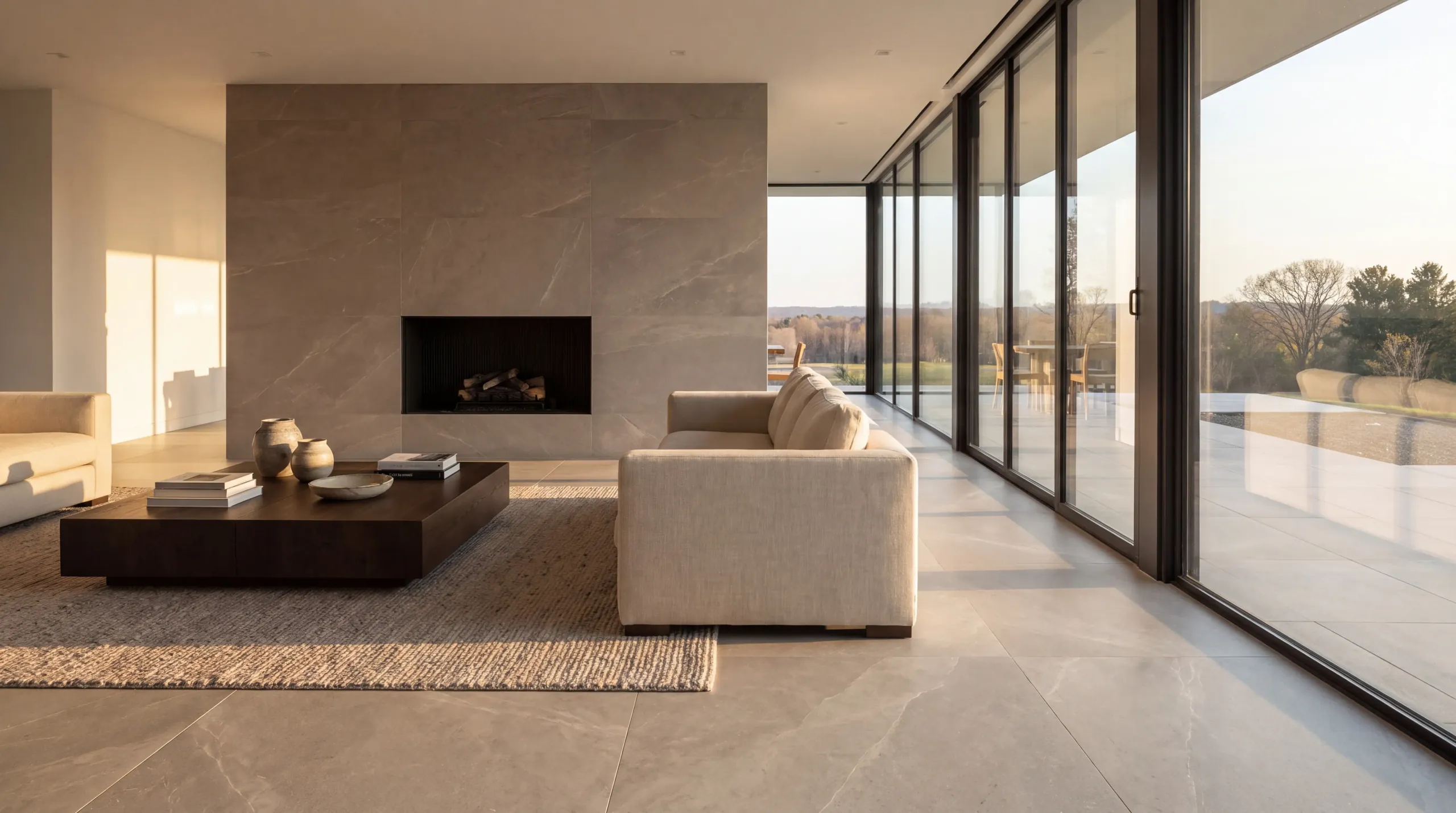
Porcelain countertops and sintered stone: what they are and how they compare
What porcelain countertops and sintered stone are, and how thickness, heat, edges, fabrication and weight compare with quartz, with sources.
KLZ Stone Supply · · 15 min read
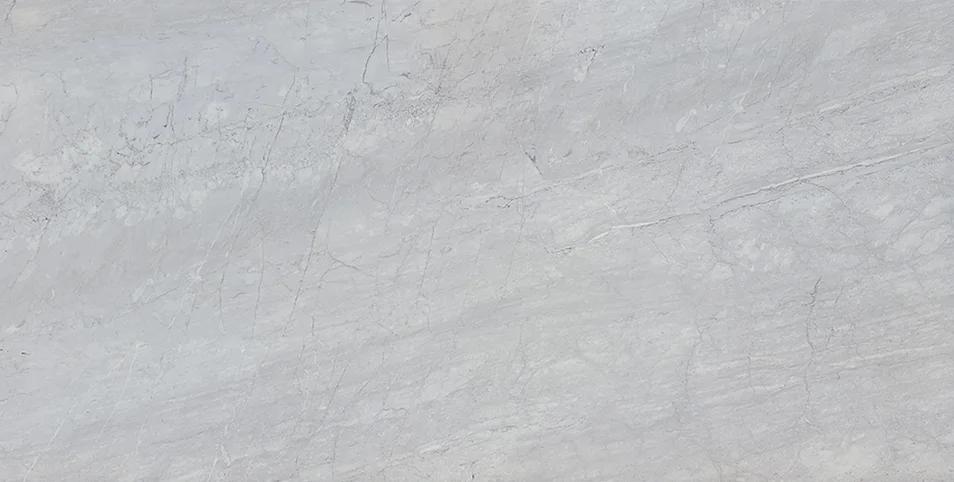


What are porcelain countertops?
A porcelain countertop is a slab of porcelain stoneware cut and finished as a kitchen or bath top. Laminam wet-grinds clay, granite and metamorphic rock raw materials with a feldspar component and ceramic pigments, compacts them, and sinters them at 1,200°C with hybrid gas and electric firing.5 Florim describes a natural blend of selected ceramic clays and mineral-based colors.6 MSI’s safety data sheet calls its slabs mixtures of mostly clays, silica sand and other minerals.12
Laminam’s 12+ and 20+ slabs measure 1,620 by 3,240 mm, about 64 by 128 inches.5 Florim sells a single size that exceeds 126 by 63 inches.6 Laminam glues a fiberglass mesh to the back of its 12+ and 20+ slabs as structural reinforcement.5 Florim reinforces its 6 and 12 mm slabs with fiberglass.6
How porcelain slabs differ from porcelain tile
The tile industry calls thin, large porcelain gauged porcelain tile panels. ANSI A137.3, the American standard for them, arrived in 2017.2 Stone World’s 2020 report describes the panels as tiles of 1 by 1 meter (about 39 by 39 inches) or larger. It says the standards define two thickness classes: 3.5 to 4.9 mm for walls and 5 to 6.5 mm for floors.3 A 12 or 20 mm countertop slab is thicker than both.
Countertop slabs run thicker than either tile-panel class
Stone World still says that 12 mm panels were excellent for countertops and vein-matched accents.2 The makers’ sheets for thicker slabs cite the ceramic tile standards instead.
What “almost non-absorbent” means
Laminam reports an average water absorption of 0.1% or less.5 Dekton reports 0.1% under ISO 10545-3,7 and Neolith’s 2018 sheet reports 0.1% or less by boiling.8 These are each maker’s own results for chosen products, so a different line from the same maker can differ.
What is sintered stone, and is it the same as porcelain?
Sources disagree on whether they are one material, though makers describe closely related products. Sintered stone is the name for slabs made from minerals compacted under pressure and fired at high heat, by processes close to porcelain’s.
Trade press reports that the European Commission and the European Organisation for Technical Assessment (EOTA) adopted a European Assessment Document, EAD 090142-00-0404.16 It describes sintered stone as an industrial product made from a wet mix of minerals without resin or cement. The mix is cold-formed by vacuum vibro-compression and consolidated by sintering at 1,100 to 1,200°C.16 Stone Specialist adds that the Commission and EOTA decided sintered stone has properties distinct from ceramic, natural and composite stones. Some ceramic makers had long held that it is simply porcelain under another name.17
Fabricator Mitchell Kennedy, quoted in Stone World’s fabrication guide, says the two are used interchangeably but are not identical. The article describes porcelain as made from clay, silicas, feldspar and other natural materials, fired in a kiln above 2,000°F. Sintered stone, it says, is still a porcelain-type material, but it mimics the way granite and marble form geologically, by combining heat with pressure. A lot of people cut them without knowing they are cutting different materials.1 For scale, Laminam’s 1,200°C firing is about 2,190°F.5
Laminam
- How it describes its slabs
- Calls them “porcelain stoneware” that is “sintered at 1200°C”.5
Florim
- How it describes its slabs
- Calls its product “stone sintered surfaces” that combine the typical characteristics of porcelain stoneware.6
Dekton
- How it describes its slabs
- Reports its results according to the ceramic tile standards EN 14411, ANSI A137.1 and ISO 13006, among other standards.7
Caesarstone and MSI
Neolith
- How it describes its slabs
- Defines a sintered stone as a material made of natural products such as stone dust, minerals or pigments, produced by applying extreme heat and pressure.9
| Maker | How it describes its slabs |
|---|---|
| Laminam | Calls them “porcelain stoneware” that is “sintered at 1200°C”.5 |
| Florim | Calls its product “stone sintered surfaces” that combine the typical characteristics of porcelain stoneware.6 |
| Dekton | Reports its results according to the ceramic tile standards EN 14411, ANSI A137.1 and ISO 13006, among other standards.7 |
| Caesarstone and MSI | Sell their slabs as porcelain.412 |
| Neolith | Defines a sintered stone as a material made of natural products such as stone dust, minerals or pigments, produced by applying extreme heat and pressure.9 |
I could not read the European document itself, and I found no ISO or ASTM standard that defines “sintered stone”. So ask a supplier for the maker and product line. That name leads to a data sheet, and the data sheet gives the thickness, the weight, the tests and the fabrication rules.
What thickness should a porcelain countertop be: 6, 12 or 20 mm?
Makers’ countertop fabrication guides cover 12 mm and 20 mm, so those are the working thicknesses. I found no maker’s countertop fabrication guide for 6 mm, so ask the maker before you specify it. Dekton’s sheet covers 8, 12, 20 and 30 mm.7
6 mmporcelain
12 mmporcelain
20 mmporcelain2 cm stone
30 mm3 cm stone
6 mm
12 mm
20 mm
| Thickness | What the makers list |
|---|---|
| 6 mm | Florim 6 mm (6.7 mm with its backing);6 Caesarstone;4 Neolith, 14 kg/m².8 |
| 12 mm | Laminam 12+ (12.5 mm, 0.49 inch, mesh-backed);5 Florim 12 mm (12.7 mm with backing);6 Dekton;7 MSI Stile.10 |
| 20 mm | Laminam 20+ (20.5 mm, 0.80 inch);5 Florim 20 mm;6 Dekton;7 MSI 2 cm.11 |
What more thickness buys
A 20 mm slab carried roughly 2.7 to 3 times the breaking load of a 12 mm slab
Thickness also decides the edge. Florim notes that building an overhang removes some or all of the mat backing from its 1/2 inch material. That lowers the slab’s capacity to withstand impact.6
Is the pattern printed on the surface or all the way through?
It depends on the slab, and the answer matters most at the edge. Stone World names three constructions.1
Printed on the surface
Inkjet applies the pattern on top, so the cut edge shows the body.
Through-body
The body, or bisque, closely color matches the top surface.
Double-loaded
The vein runs halfway into the material.
Makers answer differently. MSI’s 12 mm and 2 cm guides both say its Stile slabs carry inkjet-printed graphics “only on the surface” over a full-body porcelain slab.1011 Laminam sells body and surface continuity after cutting, drilling and edging. Its sheet marks that claim as valid for its IN-SIDE technology.5 Caesarstone says its In-Sync process ensures a uniform appearance through the entire body of the slab, creating a seamless edge on select surfaces.4
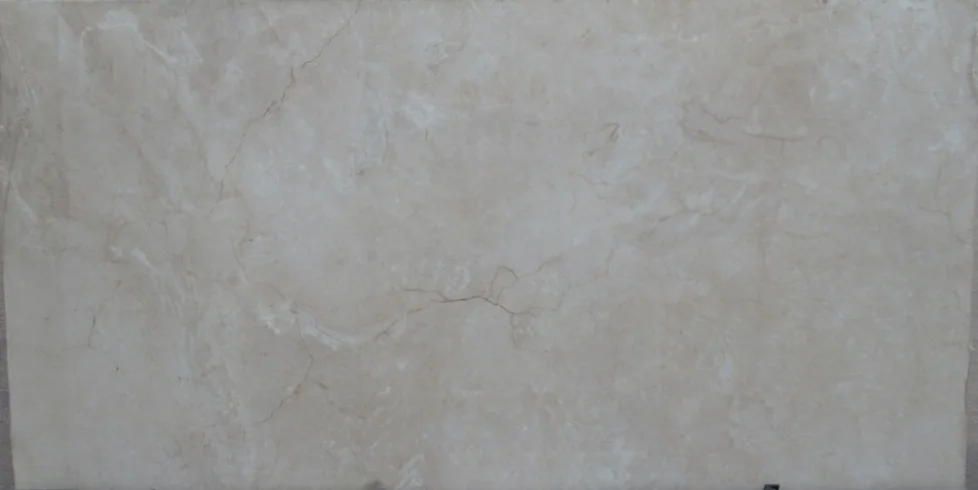
Why a printed surface changes the edge
Every cut face, a mitered corner included, shows the body, not the print. Stone World says through-body and double-loaded slabs behave differently at a mitered edge. It says porcelain is far less forgiving there than granite, where adhesive can be color-matched.1 MSI recommends polishing the edges and cutouts like natural stone, and polishing white marble-look colors with white pads to avoid color transfer.10 A sample of the flat face tells you nothing about the edge. Ask to see a cut edge of the exact slab you will buy, and a mitered corner if you plan a thick front edge.
Can you put a hot pan on a porcelain countertop?
Mostly yes, and makers still recommend a trivet. Florim says its stone surfaces are particularly resistant to thermal shock and that you can place hot pans directly on them. It still recommends trivets to protect the surface over time.6 Laminam’s reasoning is the material: the ceramic surface has no organic content, so very hot pots and pans do not alter it. Its sheet gives dry heat resistance a 5, with no visible effect up to 200°C.5
Dekton and Neolith report that their slabs pass the ISO 10545-9 thermal shock test with no damage.78 Caesarstone’s porcelain page says only that its countertops are resistant to high temperatures, with no figure.4
Where heat still matters
The risk moves from the surface to the structure, because porcelain expands as it warms. Florim warns against supports whose expansion differs too much from porcelain, such as wood or engineered stone, indoors or out.6 Laminam says to avoid reinforcements near cooking areas, because they could cause excessive expansion.5
Dekton and Neolith report expansion of 5.1 to 6.5 millionths per °C
Compare that with resin-bound quartz. Caesarstone’s warranty says seams separate or crack mainly from shifting of the substrate or from thermal shock. Thermal shock can occur when a hot pan is left on the top for more than a brief period. It says trivets or hot pads should always be used.15
Can porcelain countertops be used outdoors, and does sun fade them?
Yes, and makers back it with UV and frost tests. These are the makers’ own tests on selected products, so ask whether the maker rates the exact line you want for exterior use.
Neolith
- What it reports
- No color change in the DIN 51094 UV test and no damage in the ISO 10545-12 frost test.8
Laminam
- What it reports
- Its surface is not affected by UV light and keeps its colors. It is frost resistant, which it ties to its low water absorption.5
Dekton
- What it reports
- No damage in the frost test.7
Florim
- What it reports
- Its surfaces resist atmospheric stress and UV rays, and it designs them for exteriors and interiors.6
Caesarstone
- What it reports
- Its porcelain page claims no UV figure for countertops, and says its flooring and cladding suit outdoor use.4
| Maker | What it reports |
|---|---|
| Neolith | No color change in the DIN 51094 UV test and no damage in the ISO 10545-12 frost test.8 |
| Laminam | Its surface is not affected by UV light and keeps its colors. It is frost resistant, which it ties to its low water absorption.5 |
| Dekton | No damage in the frost test.7 |
| Florim | Its surfaces resist atmospheric stress and UV rays, and it designs them for exteriors and interiors.6 |
| Caesarstone | Its porcelain page claims no UV figure for countertops, and says its flooring and cladding suit outdoor use.4 |
Quartz differs. Caesarstone’s warranty for its quartz excludes outdoor installations and points to a separate outdoor collection and warranty.15
Do porcelain countertops scratch, chip or crack?
The face resists scratching, and the corners and edges are where porcelain fails. Laminam says its surface resists scratching and deep abrasion, but tells owners to avoid impacts on the most delicate areas: corners, edges and integrated sinks.5 Florim gives the same warning about corners and edges, and adds that ceramic knives can damage the surface, so use a cutting board.6
Scratches
Laminam’s footnote says its polished (Lucidato) surfaces resist deep abrasion but resist superficial scratches less.5 Neolith’s 2018 sheet rates surface abrasion on the ISO 10545-7 PEI scale.8 Both sheets point the same way: a dark, polished porcelain is the likeliest to show fine marks.
Neolith rates its light colors higher than its dark colors for abrasion
Chips and cracks
Laminam warns against loading a top heavily, such as by climbing on it. The top could break, particularly at processed areas such as sinks and stoves, or where support is light.5 Stone World’s fabrication guide describes the same brittleness from the shop side. A slab on an uneven table can crack as the blade cuts, and a big piece lifted flat can snap.1 MSI says you can repair chips and seams as you would on natural stone and quartz, using the same epoxy color as for seams.10
What edges can a porcelain countertop have, and what is a mitered edge?
Florim’s manual pictures bevels, rounded edges, bullnose, grooved edges and a waterfall.6 A mitered edge builds thickness: the top and a drop-down piece are cut at 45° and joined into a corner.
Laminam says to bevel at least 2 mm around an undermount sink cutout. For curved bevels it calls for a CNC machine with a 5-axis grinding wheel.5 Stone World says many manufacturers call for foam board, often a peel-and-stick product, on the bottom of the slab. A fabricator the article quotes calls porcelain at a miter “completely unforgiving”.1
Corners
Inside corners need a radius. MSI recommends a minimum 3/16 inch (5 mm) radius on inside corners and seams at every 90° return.10 Laminam sets a 5 mm minimum radius on internal angles and openings, and says internal 90° angles are not advisable.5 For L-shaped tops, Laminam describes a diagonal-cut corner for veined slabs when graphic continuity matters. A fabricator makes it from one piece of slab or two book-matched slabs, and it needs support under the point where the diagonal cuts meet.5
What does fabricating a porcelain countertop involve?
Different blades, a supported cutting table, careful handling and a support structure under the finished top. MSI says almost any countertop configuration can be fabricated, with no overhangs over 8 inches, and that walls and cabinets must be reasonably clean, square and plumb, with cabinets permanently secured.10
Cutting
- Use blades made for porcelain. MSI says porcelain is denser than granite or quartz, and blades made for it minimize chipping.10
- Put foam or cement board on the saw table. MSI says it minimizes vibration and chipping.10
- Release tension in 2 cm slabs. MSI calls for relief cuts of 3/8 to 3/4 inch on all four sides. Its 12 mm slabs come rectified and ready, with no relief cuts needed.1110
- Waterjet works well. MSI gives a feed rate of about 24 inches per minute at 60,000 psi, with the pierce pressure lowered to 20,000 psi.10
- For a sink cutout, a fabricator quoted in Stone World recommends a thin-wall core bit or a vacuum-brazed or electroplated bit. The article adds that most slab makers want cuts made clockwise around the outside of the slab, relieving roughly an inch of material as the cut goes.1
Supporting and setting
- Support every opening. Laminam says reinforcements between the supports must carry the weight of the sink or hob. The top then does not hang from the perimeter of the hole. It warns that crazing could result from inadequate support.5
- Brace the sink. MSI advises a support bar for large sinks and says to brace undermount sinks to the cabinet sides.10
- Follow the maker’s adhesive rule, because the guides differ. MSI’s 12 mm guide says fabricated tops need a large-format tile thin set with 100% coverage and cannot be spot set.10 Its 2 cm guide allows a suitable adhesive such as 100% silicone or epoxy, again with complete coverage.11 Laminam allows epoxy, polyurethane or MS polymer adhesives to bond its support materials, in points or full spread depending on the use.5
Does porcelain contain silica, and is it safe to cut?
Porcelain contains crystalline silica, far less than engineered quartz, and its dust is hazardous when cut dry.
Porcelain holds far less crystalline silica than engineered stone
Lower is not zero. Cosentino’s sheet carries hazard statements for the dust: it can damage the lungs through prolonged or repeated inhalation and may cause cancer by inhalation. It says to avoid uncontrolled dry processing and to use tools with integrated water delivery and on-tool dust extraction.13 MSI’s sheet says the highest probability of silica exposure comes from dry cutting, and recommends wet methods and respirators for cutting, grinding and polishing.12
The same MSI sheet says the finished product is odorless, stable and poses no immediate hazard to health. The hazard sits in fabrication, where cutting makes dust.12 I found no maker’s sheet that makes a health claim beyond that. Ask the fabricator how they control dust, and whether that covers cutting, grinding and cleanup.
Porcelain or quartz countertops: which is better?
On the makers’ own data, porcelain has the advantage on heat, sun and silica. The silica section has the numbers.
Hot pans
Sun and outdoors
- Quartz
- Caesarstone’s quartz warranty excludes outdoor installations15
| Question | Porcelain | Quartz |
|---|---|---|
| Hot pans | Makers report passing the thermal shock test and say trivets protect the surface over time76 | Caesarstone names thermal shock from a hot pan as a cause of seam separation and cracking, and says always use a trivet15 |
| Sun and outdoors | Makers report no color change in UV tests and no frost damage85 | Caesarstone’s quartz warranty excludes outdoor installations15 |
Porcelain suits a hot kitchen, an outdoor kitchen, or a wish for a surface with no resin. If the edge matters most, ask the fabricator which profiles they cut in each material. To choose, try a color in your room with thevisualizer, then look at the real slab and its edge with your fabricator. The weight calculator in this guide lists quartz at 2 cm and 3 cm.
How much does a porcelain countertop weigh?
About 6 pounds per square foot at 12 mm and about 10 at 20 mm. Dekton prints 6.0 to 6.4 at 12 mm and 9.9 to 10.5 at 20 mm. Florim prints 6.12 and 10.19. Laminam prints 30 and 50.4 kg/m², which is 6.1 and 10.3 pounds per square foot.765
Porcelain weighs about 3, 6 or 10 pounds per square foot at 6, 12 or 20 mm
The weight of the finished top is what your cabinets, floor and installers deal with, so check it before you order the slab. The calculator prints its assumptions and its sources beside the result. The numbers are ranges, and the natural stone rows are minimums set by the standard that governs each stone.
Tool
Countertop weight calculator
Approximate weight of 30.0 square feet
Porcelain, 6 mm
86.0 to 91.6 lb
- Pounds per sq ft
- 2.9 to 3.1
- Total kilograms
- 39.0 to 41.5
- Against 3 cm granite's minimum
- about 20%
Porcelain, 12 mm
178 to 190 lb
- Pounds per sq ft
- 5.9 to 6.3
- Total kilograms
- 80.8 to 86.4
- Against 3 cm granite's minimum
- about 40%
Porcelain, 20 mm
295 to 313 lb
- Pounds per sq ft
- 9.8 to 10.4
- Total kilograms
- 134 to 142
- Against 3 cm granite's minimum
- about 65%
Quartz, 2 cm
266 to 300 lb
- Pounds per sq ft
- 8.9 to 10.0
- Total kilograms
- 121 to 136
- Against 3 cm granite's minimum
- about 60%
Quartz, 3 cm
407 to 450 lb
- Pounds per sq ft
- 13.6 to 15.0
- Total kilograms
- 185 to 204
- Against 3 cm granite's minimum
- about 90%
Granite, 2 cm
at least 315 lb
- Pounds per sq ft
- at least 10.5
- Total kilograms
- at least 143
- Against 3 cm granite's minimum
- about 65%
Granite, 3 cm
at least 472 lb
- Pounds per sq ft
- at least 15.7
- Total kilograms
- at least 214
- Against 3 cm granite's minimum
- about 100%
Quartzite, 2 cm
at least 315 lb
- Pounds per sq ft
- at least 10.5
- Total kilograms
- at least 143
- Against 3 cm granite's minimum
- about 65%
Quartzite, 3 cm
at least 472 lb
- Pounds per sq ft
- at least 15.7
- Total kilograms
- at least 214
- Against 3 cm granite's minimum
- about 100%
Marble, 2 cm
at least 319 lb
- Pounds per sq ft
- at least 10.6
- Total kilograms
- at least 145
- Against 3 cm granite's minimum
- about 70%
Marble, 3 cm
at least 478 lb
- Pounds per sq ft
- at least 15.9
- Total kilograms
- at least 217
- Against 3 cm granite's minimum
- about 100%
What drives the cost of porcelain countertops?
Thickness, the maker and collection, the finish, the edge, the cutouts, the support and the fabricator’s tooling. None of the sheets this guide cites prints a price, so this guide prints none.
- Thickness. A 20 mm slab is more material and heavier to move than a 12 mm slab.7
- The edge. A mitered edge adds a backer board and a precise 45° cut.10
- Tooling. Porcelain needs blades made for it and often a waterjet or miter saw, which favors shops with higher-end machinery.101
- Cutouts and support. Each sink or hob needs reinforcement and edge clearances.5 Fabricated tops need full thin-set coverage in MSI’s 12 mm guide.10
- Breakage risk. A large, thin slab can crack on a table that is not level or snap when lifted flat, and that is a real cost.1
Are porcelain countertops right for your kitchen?
They suit a cook who wants heat and sun resistance and a surface with no resin. The owner accepts care at the edges and hires a fabricator experienced with the material.
Porcelain slabs in the KLZ catalog
KLZ sells wholesale to fabricators, designers and builders, and homeowners visit the Dallas showroom to choose a slab and buy through their fabricator. The catalog lists these four at 12 mm. To see a full slab and its edge, visit theDallas showroom.
- Absolute White HonedPorcelain · Honed finish

- Cemento GreyPorcelain · 12 mm

- Cemento LattePorcelain · 12 mm
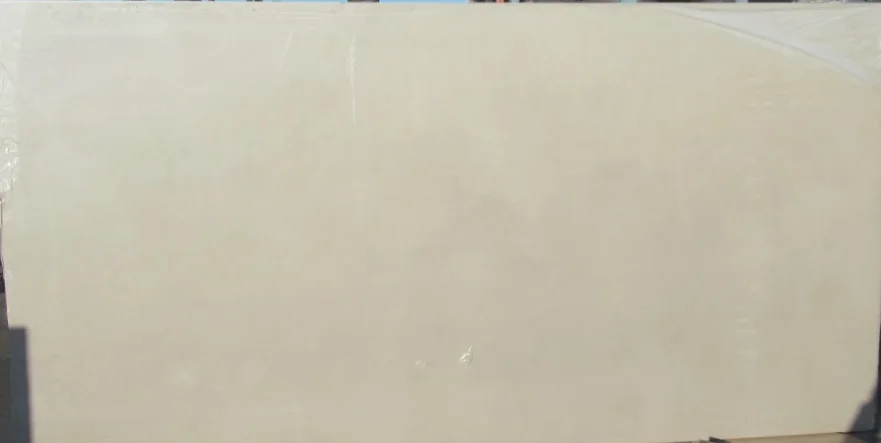
- Oslo LeatherPorcelain · Leathered finish

Pros
- Near-zero absorption, 0.1% or less in the makers’ tests.57 Dekton’s ISO 10545-14 results give stain classes of 5 for green agent, iodine and olive oil.7
- Passes the thermal shock and frost tests, and the UV test in Neolith’s sheet.78
- Much less silica than engineered quartz.1214
Cons
- Edges and corners chip and crack under impact, so they need a bevel or round, and a mitered drop for a thick front edge.5610
- A printed pattern may not run through the body, so a cut edge looks different from the face.101
- Specialized blades, waterjet and support work in fabrication.105
- Dust from cutting still carries a silica hazard.1312
What to ask before you choose
- Which maker and product line is this slab, and what thickness and backing does it have?
- Is the pattern on the surface only, through the body, or double-loaded, and can I see the cut edge?
- For a thick front edge on a 12 mm slab, will you miter it, build it up with a strip or use a 20 mm slab, and can I see a sample made that way?
- Where will the seams and supports fall, and how are the sink and cooktop cutouts reinforced?
- Have you cut this maker’s slabs before, and how do you control silica dust?
Questions people ask
What are porcelain countertops?
A porcelain countertop is a large slab of porcelain stoneware, made from clay, feldspar and mineral pigments that are compacted and fired into a dense sheet, then cut and finished as a kitchen or bath top. Makers list slabs at 6, 12 and 20 mm. Laminam, for one, describes its slabs as porcelain stoneware sintered at 1,200°C with a fiberglass mesh bonded to the back.
Source: Laminam, technical guide for furnishing and design, 12+ and 20+
What is sintered stone?
Sintered stone is a name for slabs made from minerals compacted under pressure and fired at high heat into a dense surface. Makers describe a process close to porcelain’s, and Dekton’s data sheet reports its results under ceramic tile standards. A fabricator quoted in Stone World says fabricators hear the two terms used interchangeably but that they are not identical, and that people cut them without knowing they are cutting different materials. Trade press reports that a European Assessment Document defines sintered stone as a category of its own, and I could not read that document itself.
Source: Stone World, A fabricator’s guide to cutting porcelain and sintered stone
Are porcelain countertops heat resistant?
Yes, according to the makers. Laminam says its ceramic surface contains no organic materials, and Florim says its slabs take hot pans placed directly on the surface, while still recommending trivets to protect the surface over time. Laminam rates its dry heat resistance 5, with no visible effect up to 200°C. A sudden, local temperature change still stresses seams and cutouts, so use a trivet.
Do porcelain countertops chip or scratch?
The face resists scratching, and the weak point is the edge. Makers say to avoid impacts on corners, edges and sink cutouts, and Florim advises a bevel, round or diagonal edge of at least 1/16 inch to prevent chipping. Polished surfaces show light scratches more than matte ones, according to Laminam. MSI says chips and seams can be repaired with color-matched epoxy.
What thickness should porcelain countertops be?
Makers’ countertop fabrication guides cover 12 mm and 20 mm. A 12 mm slab is about 6 pounds per square foot and a 20 mm slab about 10. A 20 mm slab carried roughly 2.7 to 3 times the breaking load of a 12 mm slab in Dekton’s data sheet tests, and gives the fabricator a thicker edge. Ask the maker before using 6 mm for a countertop.
Porcelain vs quartz countertops: which is better?
On the makers’ own data, porcelain has the advantage on heat, sun and silica, and it needs more care at the edges and corners. Caesarstone’s warranty names a hot pan left on the top and thermal shock as causes of seam separation and cracking in its quartz and excludes outdoor use, while porcelain makers report no color change in UV testing and no damage in thermal shock tests. Porcelain slabs contain far less crystalline silica than engineered quartz, according to the safety data sheets and the CDC.
Source: Caesarstone, Residential Limited Lifetime Warranty (June 2025)
What affects the cost of porcelain countertops?
Thickness, the maker and collection, the finish, the edge, the number and kind of cutouts, the support under the top, and the fabricator’s tooling. Porcelain needs blades made for it and often a waterjet, and a mitered edge adds a backer board and labor. A single per-square-foot price hides where it comes from, so ask for a quote itemized by slab, fabrication and install.
Source: MSI, Stile 12mm porcelain fabrication and installation guide
How much does a porcelain countertop weigh?
About 6 pounds per square foot at 12 mm and about 10 at 20 mm. Dekton prints 6.0 to 6.4 lb/ft² at 12 mm and 9.9 to 10.5 at 20 mm, Florim prints 6.12 and 10.19, and Laminam prints 30 and 50.4 kg/m². The weight calculator in this guide turns a size into pounds and sets porcelain beside quartz, granite, quartzite and marble.
Sources
Each page was read on unless its own date is given.
- 1Stone World, A fabricator’s guide to cutting porcelain and sintered stone (Jason Kamery, 25 June 2026)
- 2Stone World, Technical focus: a brief history of gauged porcelain tile panels
- 3Stone World, gauged porcelain tile panels and ANSI A137.3 (9 January 2020)
- 4Caesarstone, Porcelain
- 5Laminam, technical guide for furnishing and design, 12+ and 20+ (2025)
- 6Florim, FLORIM stone US technical manual (edited 04/2020)
- 7Cosentino, Dekton technical data sheet, rev. 26 (11/2023)
- 8Neolith, technical data sheet (16 February 2018)
- 9Neolith, What is a sintered stone
- 10MSI, Stile 12mm porcelain fabrication and installation guide
- 11MSI, Stile 2cm porcelain fabrication and installation guide
- 12MSI, Safety data sheet for porcelain slab products (April 2025)
- 13Cosentino, Dekton safety data sheet (rev. 11, September 2024)
- 14CDC, MMWR 68(38): silicosis among engineered stone fabricators
- 15Caesarstone, Quartz, Mineral and ICON Surfaces Residential Limited Lifetime Warranty (June 2025)
- 16Stone Update, EU Defines Sintered Stone
- 17Stone Specialist, Lapitec is the first CE-marked sintered stone (reports the European Assessment Document for sintered stone)